Kainos Microschool Featured by the National Microschooling Center: What Accreditation Gave Us That We Didn't Expect
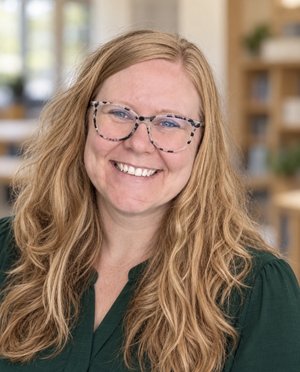
This post is written by: Jill Haskins- Founder and Director of Kainos Microschool
When we decided to pursue accreditation for Kainos Microschool, we knew there would be practical benefits.
Accreditation would provide an additional layer of credibility for families. It would help ensure that the work students complete at Kainos is recognized outside our walls. And it would require us to take a close look at our academic programs, policies, finances, operations, and long-term sustainability.
What I didn't expect was how much the process would change me as a school leader.
That experience was recently highlighted by the National Microschooling Center in an article titled “Four Unexpected Results from Middle States’ Microschool Accreditation Process.”
Kainos was one of four microschools from across the country featured in the article, which explored some of the unexpected ways accreditation can strengthen both microschools and the people building them.
Accreditation Gave Me Something I Wasn't Looking For
When I began the accreditation process with the Middle States Association, I expected it to expose gaps.
And it did.
We examined our systems, policies, finances, instructional practices, student outcomes, mission, and plans for the future. Accreditation forced us to clearly articulate not only what we do at Kainos, but why we do it.
But somewhere in that process, something else happened.
I became more confident in what we had built.
As I shared with the National Microschooling Center:
“The process confirmed things in me as a school leader that were there, but I didn't believe.”
That may have been the most valuable part of the entire experience.
Building a Different Kind of School
Kainos doesn't look much like a traditional school.
We intentionally built it that way.
We are an accredited, faith-integrated microschool in Fort Wayne serving students in ages 7-18 through a modern one-room-schoolhouse model.
Our students aren't expected to learn the same thing, in the same way, at the same pace simply because they happen to be the same age.
Instead, we focus on personalized education, mastery, meaningful relationships, mixed-age community, student interests, and helping kids experience success as learners.
When you build something outside the traditional educational system, though, there are moments when you wonder:
Is this actually working?
Are we doing enough?
Can a tiny school like ours really provide a legitimate, rigorous education?
Accreditation required us to answer those questions with evidence rather than feelings.
And the answer was yes.
Not because everything at Kainos is perfect. It isn't.
But because there was substance underneath what we were building.
Why Accreditation Matters at Kainos
Kainos earned accreditation through the Middle States Association of Colleges and Schools in November 2025.
Middle States has developed an accreditation pathway specifically designed for microschools, recognizing that a school serving a few dozen students shouldn't necessarily be evaluated through exactly the same processes as a school serving several thousand.
The National Microschooling Center notes that traditional accreditation was historically difficult for many microschools because of the expense, documentation requirements, lengthy timelines, and processes designed for much larger institutions. The newer microschool pathway was intentionally redesigned around the realities of small, innovative schools.
For Kainos, accreditation means there is an independent organization looking beyond our marketing materials and asking harder questions:
Are students actually learning?
Is the educational program aligned with the school's mission?
Are appropriate systems and policies in place?
Is the organization financially and operationally responsible?
Does the school evaluate itself and continuously improve?
Those are questions we believe every school should be willing to answer.
Small Doesn't Have to Mean Unproven
Microschooling is still relatively new to many families.
Parents sometimes understandably wonder whether choosing a small, unconventional school means sacrificing legitimacy or academic quality.
We don't believe families should have to choose between personalization and accountability.
Kainos can be small.
We can know our students deeply.
We can allow students to work at different academic levels.
We can give kids room to move, build, create, ask questions, pursue interests, and occasionally have school days that look nothing like traditional school.
And we can still hold ourselves to meaningful external standards.
Those things aren't mutually exclusive.
In fact, we think they belong together.
We're Proud to Be Part of a Bigger Movement
Being featured by the National Microschooling Center is especially meaningful because Kainos is one small part of a much larger shift happening in education.
Families across the country are asking whether school has to look the way it has always looked.
Educators are building new models.
Students who struggled in conventional environments are discovering that struggling in one educational model doesn't necessarily mean they are incapable learners.
And small schools like ours are demonstrating that education can be both deeply personal and academically serious.
We're grateful to the National Microschooling Center for including Kainos in this conversation and grateful to Middle States for creating an accreditation process that didn't ask us to become more like a traditional school.
Instead, the process challenged us to become a stronger version of Kainos.
And perhaps that was the most unexpected result of all.
Read the National Microschooling Center article:
Four Unexpected Results from Middle States’ Microschool Accreditation Process